Showing posts with label Central Europe. Show all posts

Monday, 5 January 2015

Berlin Germany with the Zipfs

In mid November we visited Berlin Germany with Stef Zipf (one of Megan's bridesmaids), James Denue, Stef's parents and her brother.  Stef's mother grew up in Germany and her father was stationed in Berlin for a few years during the Cold War, so it was a great opportunity to learn from former locals.  They showed us around to some of the key historical attractions and they taught us about German culture.

Enjoying a beer with the Zipf family!
Us at the Brandenburg Gate

Historical Berlin

It's hard to think of a city more intertwined with the history of the 20th century then Berlin.  It was the capital of Germany during both World Wars.  Following the defeat of the Nazis in WW2, Berlin was divided into sectors and West Berlin would be an outpost of democracy surrounded by communist East Germany.  Berlin was the site of a major blockade/airlift, an infamous wall, many espionage adventures, and the fall of communism.  Walking around Berlin you can see many of the building and landmarks that played a pivotal role in world history.  There are bullet holes from the Battle of Berlin in 1945.  There are still standing sections of the Berlin Wall with varying levels of artistic and political graffiti. There is the iconic Brandenburg gate - site of so much history including the fall of the Berlin Wall.  There is the Kaiser Wilhelm Memorial Church - a bombed out building that was left in disrepair as a testament to the destruction of war.  The list goes on and on
The Kaiser Wilhelm Memorial Church - left bombed out as it was at the end of WW2
The Berlin Cathedral with a shot of the TV tower to the left and the Altes museum in the foreground.
In addition to the landmarks there are also great museums to see in Berlin.  We visited the DDR museum which shows what life was like under communist rule.  Life under communism started off with optimism and then steadily grew into poverty and despair.  The museum had many interactive components including a driving simulator in a Trabant car, a model communist home, a voting simulation (spoiler: if you don't vote for the communist party it doesn't end well) and a modified foosball game showing the futility of playing for East Germany.  We later found out that the East German secret police (the largest police force ever) would break into people's homes and 1) steal their underwear and 2) move their possessions around to create paranoia and make their victim's questions their sanity.
The infamous Trabant cat - made of plastic, frequently broken and with a waiting list of 14 years!
Modified Foosball at the DDR museum - The East German side
can only defend against the West German side, with no way to score!
Another great museum we visited was the German Historical Museum.  The exhibits were very robust and well constructed.  It was fascinating seeing how Germans portray their role in history.  Besides the museums we took a History Walking Tour.  There we passed by many of the aforementioned monuments and learned more of Germany's history.  It was insightful, moving and thought provoking.  We even learned that the costumed guards at Checkpoint Charlie are actually strippers.
Checkpoint Charlie = tourist trap

New Berlin

While Berlin has a fascinating past, it also has an exciting future.  It's blessed with heaps of amazing art including the aforementioned graffiti.  The Holocaust Memorial is a moving example of great artwork in the physical space.  Berlin also has a thriving technology startup scene.  It's changing industries with new fascinating companies.  The blend of art and technology has created a culture that attract the hip and cool of Europe.
The Holocaust Memorial at Dusk
Another shot of the Holocaust Memorial at dusk.
During our visit the Christmas markets started opening up.  They are a German tradition and although they've inevitably taken a modern slant in terms of goods and availability and location, they still hold some German traditions such as the wood decor and food offered.  It seemed like there were markets everywhere in Berlin and it was only mid November!
Christmas Market at Night
Beer Advent Calendar!  24 days of beer.
Fried Pork Knuckle is fantastic
Berlin has a thriving nightlife scene.  It has both really cool bars and pumping nightclubs.  If you want to party from 3pm on Wednesday night thru 4am on Monday you can do that in Berlin.  Megan and I passed on the club scene though and explored the pub/bar scene.  We sampled quite a few places and they all struck me with their: friendliness - it was easy to interact with locals, beer quality - they had an awesome selection of beers including some from Saugatuck Michigan, music - the music was typically good and always at a perfect volume (not too loud to talk but not too quite that it's awkward) and entertainment - in the form of foosball or shuffleboard or trivia or something else unique and interesting.  Berlin's beer scene was awesome.  Beerlin/Barlin.

German food: pretzels, soups, and sausages with local beer at a German Beer Hall!
The beautiful Brandenburg Gates at night.

Monday, 10 November 2014

Budapest: Ruin Bars, Baths, and ... (Belated Post)

Ruin Bars, Baths, and ….

The last stop on our Central Europe adventure before school (back in August) was Budapest, the capital of Hungary.  Hungary has an incredibly interesting history that differs from most of Europe.  The original Hungarians were a nomadic group from Mongolia and were later taken over by the Turkish empire.  This explains why Hungary has a culture and language that is strikingly different than much of Europe. Because we were at the end of our trip we were looking forward to more relaxing activities: dining and Turkish baths. 
Enjoying a beer at an outdoor cafe in central Budapest    
Like in Poland and Czech Republic, we started off our trip doing a free walking tour of the city.  This helped us to get our bearings and learn some of the history of Hungary and Budapest.  Our walking tour highlighted some of the beautiful architectural buildings in Budapest namely St. Peters and Mathias’ churches.  The architecture, rolling hills, and the Danube make Budapest a beautiful city.  We were able to take it all in by doing a river cruise at night and hiking to the top of Gellert hill to take in the sweeping views.   This was one city where it’s worth it to take the hop-on-hop-off tour given the diversity and spread of so many sights. 
Parliament Building at Night.
Hop on, Hop off, Tourist shot!
Budapest used to be two cities separated by the Danube: Buda and Pest.  The Pest side is made up of rolling hills and includes the Palace and St. Mathia’s Church.  It is generally considered to be the wealthier side of Budapest.  The Buda side, which houses St. Peter’s Church is a little grittier but houses the trendy up and coming Jewish Quarter district.  The Jewish Quarter is famous for its “Ruin Bars”, which are old dilapidated buildings or courtyards that have been turned into trendy bars and clubs.  We tried out a few and our favorites were Szimpla Kert (third best bar in the world) and Instant.  These are a must see if you go to Budapest.  This area also plays host to some of Budapest’s best restaurants.  Thanks to some recommendations from our friends we were able to eat very well in Budapest!
Szimpla Bar - it's massive, this ins only a tiny area.
One of the best ways to enjoy the Turkish influence in Budapest is to visit a Turkish Bath.  Budapest sits on over mineral hot springs, which supply numerous world famous Turkish bathhouses in the city.  Each bathhouse is a little bit different and can range from opulent indoor bath spas to open air night spa clubs.  Since it was really hot in August we set our sights on Palatinus, which is all outdoor and on San Margaret island on the Danube.  What we ended up getting was a Hungarian water park, complete with a wave pool, waterslides, and hot pools with floating chess boards.  It wasn’t exactly what we were expecting, but since it was off the beaten path we were the only tourists there we got some quality people-watching.   We also sampled the Hungarian equivalent of carnival food which is langos.  Langos are a fried doughy base with cheese and toppings on top.  Like a doughnout pizza.  As you can guess they scored high on taste and low on health.

Our trip included a dive into Hungarian history.  We visited the Hungarian history museum which boasted an extensive collection of artifacts and well written exhibits.  Hungary has been through some incredibly high times (near the end of the 19th century) and through some incredibly lows ones as well: World War II and Communism.   
Liberty Statue - one of the few remaining communist monuments
We also took a communism walking tour to learn about life under communism and the political activity in Budapest.  Our tour had a special guide who was passionate about politics.  He spent the majority of time explaining the worrying trends in Hungarian politics.  Whereas the majority of Eastern Europe is moving towards more open markets and democracy, Hungary is become more isolated and despotic.  It’s a trend that is highlighted by the Holocaust monument debacle – where the current party created an insensitive and inaccurate portrayal to spin Hungary’s involvement in WWII.  
Buda Castle
 Our total time in Budapest was about four days.  We certainly saw and experienced much of what this fascinating city has to offer.  The end of our Central Europe trip marked our transition from funemployment to full time students at London Business School.

Monday, 6 October 2014

Krakow: Return to the Motherland

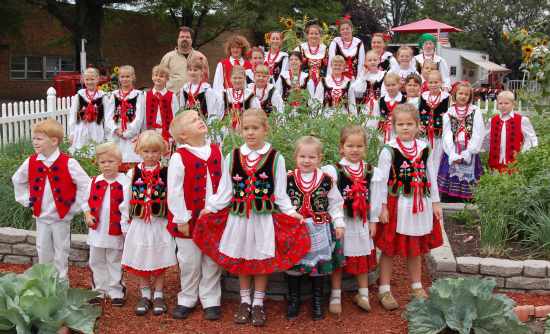
After leaving Prague and Cesky Krumlov we took a nigh-train to Krakow Poland.  This was hugely important to Jeffrey as his father's side of the family is 100% Polish with his grandparents coming arriving in the US at a very young age.  Those Polish roots had manifested themselves in cultural traditions such as polish dancing (in polish costume), polish food such as Kielbsa and of course Polish jokes.  Whether it was a romanticism or a sub-conscious drive - Jeffrey did feel connected to Poland and the people there.

Night-Train Night Pain

We took the overnight train from Prague to Krakow.
The Good:

  • Train stations are close to the city centers making transport easy
  • Sleeping in the train overnight eliminated the cost of a hotel/guesthouse room
  • Train travel is relatively authentic
The Bad:
  • The tickets from Krakow to Budapest, which we had to book last minute, were expensive
  • The bed mattresses were pretty firm
  • There wasn't a whole lot of space at the top
Good thing we are both small.
The Ugly:
  • We had noisy/obnoxious passengers in our car twice.  First it was two male UK college students who gossiped and complained like spoiled brats.  The second time was three french girls who had a picnic complete with stinky food and loud conversation while we were trying to sleep.
  • Temperature control was non-existent making it very hot at the top.
It was survivable and definitely not the worst experience of the trip.  I think I might even recommend it to others if they have a decent pain tolerance and a talent for heavy sleeping.

Once we arrived in Krakow we walked from the train station to our hostel to drop our bags off.  We came across a rather unique scene; groups of folks were marching together singing and carrying banners.  Because of our lack of Polish language skills it was difficult for us to understand.  We tried to use context clues.  One being the high proportion of clergy (priests and nuns) in the procession.  Another being the continuous flow of people and rather up-beat spirit.  
I joked with Megan that in order to figure out what the parade was for, we could follow it to its termination.  Boy was that a bad idea.  We ended up learning that the procession was a pilgrimage to the shrine of Jasna Gora that just started and would last for 10 days and 120 kms.  Safe to say that would of altered our vacation plans a bit.

Instead of walking to Jasna Gora we grabbed a quick breakfast at a local cafe.  It wasn't fancy by any means but filled the void and gave us some energy ahead of our walking tour and museum plans.
No frills Polish Breakfast.

Main Market Square in Krakow

Our sightseeing began at the Main Market Square.  It's the largest medieval town square in Europe.  It's a UNESCO heritage site and the surrounding buildings still have their medieval architecture roots.  In old times the parents would bring their daughters of age into the square and past the cafes in hopes they catch the eye of a young bachelor.  Today there are still many restaurants and cafes where locals and tourists can enjoy the scenery. 
In front of the massive and beautiful Cloth Hall
One of the really cool buildings was the Cloth Hall.  It was the center of trade in Krakow which put itself on the map as a trading town and key stop-off on trade routes through Europe.  In the past exotic spices, foods, and metals were sold there, now its just mainly cheesy souvenirs.  I'm not going to complain too much as I bought both a hat and shirt (fulfilling my polish pride).

Another beautiful building on the Main square is St. Mary's Basilica with two rising towers.  Every hour a trumpeter emerges to play a tune to tell the town everything is alright.  The trumpeter abruptly ends the song mid-note to comemorate a trumpeter that was shot in the throat while sounding the alarm of invading Mongol attack.
St. May's Basilica
The Basilica is very beautiful inside as well.  We dropped in and sad a few prayers and paid respects.  On the outside of the basilica are a number of beautiful memorials including this one of Pope John Paul II (a former archbishop and student of Krakow).

The Town Hall Tower is also a cool site.  It was attached to a complete town hall building but part of it was demolished in efforts to open things up.  Now just the tower remains and it is beginning to lean as it wasn't meant to standalone.
Last picture with dopey me in it for a while.  I promise.

Nice Classical Architecture

We caught a nice walking tour around town and saw these sites as well as the Krakow campus (a very old university) and the Wawel Castle complex.  The Wawel castle was the seat of the Polish empire.  It is composed of the King's residence, many administrative buildings, and beautiful religious buildings.  The Castle towers over the town and is a great spot for views.
Back view of the Castle.
During our walk through town we saw the Opera house.  It looked especially neat at night.

Hostel & Partying

We stayed at Tom and Greg's Beer Hostel.  True story: Tom and Greg's Party Hostel was sold out so we had to settle for the Beer Hostel.  Here we experienced the best and worst of hostel life.  On the good side we met a lot of social people and had no problem making friends.  Every night the hostel hosted drinking events such as Sangria night and a Pub Crawl.  Our first night we took it easy because we were going for some heavy sightseeing the next day at Auschwitz the next day.  Our plans to get a good night sleep were thwarted by hostel shenanigans.  At 4am a drunk belligerent hotel guest pounded on our door for 30 minutes to be let in.  Eventually he realized he was at the wrong room and then passed out on the couch.  Those thirty minutes were painful and awkward.  The next evening we decided to partake in the Pub Crawl to get a heavier night's sleep.  Don't worry we were safe and sound.  The bar and club scene in Krakow is outstanding.
Now that is a Sangria night!

Polish Ethnography Museum

The Polish Ethnography Museum was a hoot.  Maybe not quite as entertaining as the KGB Museum in Prague but just as fascinating.  It's density of artifacts and facts was impeccable.  Each exhibit came with a 10 page report on the thorough history of life in Poland.  For example we spent half an hour learning about early agriculture methods including honey farming.  The museum was more anthropology and less entertainment.  Not for the faint of heart.
Hey Look a Bear - Nope it's a Beehive!
The Polish traditional costumes were particularly cool.  They had over 30 and they traced the differences based on region, class and time period.

Polish Food

I like Polish food but I understand that I'm biased being 50% Polish.  When I told my Italian friend that we enjoyed the food in Poland he said "you must be kidding me.  Even American food is better than Polish food."  (ouch)  I tried my hardest to sell Megan on Polish food and we had a few feasts.  We searched out the best in Kielbasa and Pieorgies - Polish Musts.  At Pierogi Vincent we even tried blueberry pierogis (they had over 30 varieties which you can see at their website http://pierozkiuvincenta.pl/menu).  We also tried a few different foods too.
Golabki - cabbage stuffed with ground beef - tasty sauce
Herring

Home of Pope John Paul II

One of the most famous Krakow residents was Pope John Paul II.  He was a student at the local university and he later became the Archbishop of Krakow.  There is a museum where you can visit where he lived and see some of his artifacts.  There was a variety of stuff like the kayak he owned as a young man, a set of skis, many church outfits and gifts he was given by world leaders.  It was moving and inspiring seeing pictures of him throughout his life.  It made me very proud to be Polish.


Krakow was great.  We enjoyed our short stay and would definitely recommend it to others.

Thursday, 25 September 2014

Reflections on our visit to Auschwitz

Note: The Holocaust is a very difficult subject yet one I believe needs to be talked about lest we forget.  I spent extra time thinking about how to write about this in the most sensitive and accurate manner.  I hope you learn a little bit from it and feel inspired to visit yourself.

While in Krakow we decided to visit Auschwitz - one of the most infamous Nazi concentration/extermination camps.   1.1M people died there, more then all the British and US losses in the second world war.  As global citizens we thought necessary to visit this dark piece of history.  It was a time for reflecting on history, morality, and humanity.  The camp is in the Polish country side, not far from Krakow.  The area would be scenic if it weren't for the knowledge of the evil done there.

Our tour was audio-guided by a highly trained expert.  She provided insightful commentary and answered our questions.  There are multiple components to the Auschwitz-Birkenau complex.  The first is the older camp which now houses the museum and artifacts.  As you walk to it you see the infamous sign with the cruel lie "Work Makes You Free":
We then walked through the camp.  It was an eiry chilling experience made more ominous by the overcast skys and drizzle.  Survivors of Asuchwitz (their weren't many) say the place is almost the same as it was then except there was no grass just mud.

Barbed wire and train tracks.
Auschwitz was at the center of many railroads.  This was planned and indicative of the ruthless efficiency in which the Holocaust was conducted.  The brick buildings were former barracks that were turned into pseudo prisons.  We saw the places where thousands were tortured, experimented on, and executed.
The museum exhibits were instrumental in connecting the empty physical site with the actual human impact.  Most chilling were the leftover relics.  Their presence shows the crimes, their quantity shows the magnitude, and their categorization shows the evil calculation.

Pots and pans of the victims.  Most brought their closest possessions unaware of their future fate.
The luggage of the victims with names of real people.
Recreation of the operation of the large gas chambers.
After the exhibits we walked to the first crematorium.  It is still physically present and it provides chilling evidence to the crimes there.  As the war turned against Nazi Germany they increased the pace at which they executed their crimes.  This involved the construction of 4 large crematoriums and around 100 barracks.  The living conditions in the barracks were designed to provide a horrible experience.  We toured a recreation of one of those barracks.
As the Soviet army approached in 1944 the Nazis began destroying evidence of the camp.  They burned and destroyed records and demolished the crematoria and many of the barracks.  Below is the wreckage of one of the large crematoria.  Even so there is plenty of evidence of the evil there.

The visit to Auschwitz was extremely powerful.  Its a somber experience that creates more questions the answers.  To me it is a reminder to never lose our humanity and to appreciate the freedoms we do have.  To me it is also a reminder to fight for others and to stand up against tyranny.  We all have obligations to look after and take care of each other.  And we all have moral obligations to promote peace, understanding and diversity.
Auschwitz Memorial
If you are interested in learning more about the history of Auschwitz the wikipedia page is comprehensive and consistent with what we learned during our tour.  The BBC has also produced a solid documentary on Auschwitz which can be seen via Netflix.

Monday, 22 September 2014

Floating down the Vltava in Cesky Krumlov

During our central/eastern Europe vacation we took a side trip to Cesky Krumlov.  I was lukewarm about visiting Cesky Krumlov when Megan first proposed the idea.  It seemed out of the way and we had so many other big name places that we wanted to include.  Megan persisted and fortunately her tenacity paid out as we had a wonderful time in this small countryside town.

Cesky Krumlov

Visiting Cesky Krumlov is akin to stepping back into history.  The town center is a UNESCOheritage site, making it well protected and preserved.  All the shops, bar and restaurants are local and authentic.  The roads are winding, narrow and paved in cobblestones.   The heartbeat of the city center is the pretty town square with shops and cafes.  The city center is in the shadow of the beautiful Rosenberg Castle across the river.  The Rosenberg Castle has two really cool things: an authentic baroque theatre and a bear pit


Laibon - Cute CK Restaurant

Our first night we ate at a wonderful restaurant on the river.   We arrived just before dusk and were treated to some magical views.


The atmosphere was cozy, romantic and unpretentious.  We struck up conversations with the staff and enjoyed chatting with the owner – a nomadic world traveler.  The food was quite tasty.  We got the vegetarian sampler – a bit of dhal, thai curry, middle eastern seitan, and Mexican black beans. It was eclectic and tasty.  The beers were tasty too.

Enjoying our delicious dinner at Laibon

River Kayaking

Our main attraction for Cesky Krumlov was the river kayaking.  There is a bit of infrastructure in place where you can rent kayaks or rafts and then journey down the river for a day or more.  Along the river there are stops every 2-3 miles where you can resupply with food, restrooms and beer.  The route was quite scenic in August as we saw plenty of Green.
Impressive selfie work by Megan.

Pure Czech Republic.


Each of the small stops had its own local flair.  We indulged in pancakes, chips, fruit, and multiple orders of sausages. 
Sausage, pumpernickel bread, mustard and beer after a few hours of kayaking
One stop even had a touch of bizarre Amercana.
Must also be an SEC fan
The major challenge we encountered was a rainstorm 2/3 of the way through our trip.  We were enjoying one of our sausages and beers when the rain began to come down with ominous clouds in the sky.  At this point Megan and I decided to race out the weather rather than stay in the comforts of the shelter.  It was a big mistake.  We ended up getting absolutely drenched and I was freezing for the next hour.  Our lack of composure in our composure in our decisoinmaking was pretty poor.  After 30 minutes the rain stopped and we made it to a shelter where warm food and drink warmed us up. 
Enjoying the views from the Castle.
 We would highly recommend rafting in CK as a way to see the countryside, get some exercise and sample local food.