Showing posts with label museum. Show all posts

Monday, 5 January 2015

Berlin Germany with the Zipfs

In mid November we visited Berlin Germany with Stef Zipf (one of Megan's bridesmaids), James Denue, Stef's parents and her brother.  Stef's mother grew up in Germany and her father was stationed in Berlin for a few years during the Cold War, so it was a great opportunity to learn from former locals.  They showed us around to some of the key historical attractions and they taught us about German culture.

Enjoying a beer with the Zipf family!
Us at the Brandenburg Gate

Historical Berlin

It's hard to think of a city more intertwined with the history of the 20th century then Berlin.  It was the capital of Germany during both World Wars.  Following the defeat of the Nazis in WW2, Berlin was divided into sectors and West Berlin would be an outpost of democracy surrounded by communist East Germany.  Berlin was the site of a major blockade/airlift, an infamous wall, many espionage adventures, and the fall of communism.  Walking around Berlin you can see many of the building and landmarks that played a pivotal role in world history.  There are bullet holes from the Battle of Berlin in 1945.  There are still standing sections of the Berlin Wall with varying levels of artistic and political graffiti. There is the iconic Brandenburg gate - site of so much history including the fall of the Berlin Wall.  There is the Kaiser Wilhelm Memorial Church - a bombed out building that was left in disrepair as a testament to the destruction of war.  The list goes on and on
The Kaiser Wilhelm Memorial Church - left bombed out as it was at the end of WW2
The Berlin Cathedral with a shot of the TV tower to the left and the Altes museum in the foreground.
In addition to the landmarks there are also great museums to see in Berlin.  We visited the DDR museum which shows what life was like under communist rule.  Life under communism started off with optimism and then steadily grew into poverty and despair.  The museum had many interactive components including a driving simulator in a Trabant car, a model communist home, a voting simulation (spoiler: if you don't vote for the communist party it doesn't end well) and a modified foosball game showing the futility of playing for East Germany.  We later found out that the East German secret police (the largest police force ever) would break into people's homes and 1) steal their underwear and 2) move their possessions around to create paranoia and make their victim's questions their sanity.
The infamous Trabant cat - made of plastic, frequently broken and with a waiting list of 14 years!
Modified Foosball at the DDR museum - The East German side
can only defend against the West German side, with no way to score!
Another great museum we visited was the German Historical Museum.  The exhibits were very robust and well constructed.  It was fascinating seeing how Germans portray their role in history.  Besides the museums we took a History Walking Tour.  There we passed by many of the aforementioned monuments and learned more of Germany's history.  It was insightful, moving and thought provoking.  We even learned that the costumed guards at Checkpoint Charlie are actually strippers.
Checkpoint Charlie = tourist trap

New Berlin

While Berlin has a fascinating past, it also has an exciting future.  It's blessed with heaps of amazing art including the aforementioned graffiti.  The Holocaust Memorial is a moving example of great artwork in the physical space.  Berlin also has a thriving technology startup scene.  It's changing industries with new fascinating companies.  The blend of art and technology has created a culture that attract the hip and cool of Europe.
The Holocaust Memorial at Dusk
Another shot of the Holocaust Memorial at dusk.
During our visit the Christmas markets started opening up.  They are a German tradition and although they've inevitably taken a modern slant in terms of goods and availability and location, they still hold some German traditions such as the wood decor and food offered.  It seemed like there were markets everywhere in Berlin and it was only mid November!
Christmas Market at Night
Beer Advent Calendar!  24 days of beer.
Fried Pork Knuckle is fantastic
Berlin has a thriving nightlife scene.  It has both really cool bars and pumping nightclubs.  If you want to party from 3pm on Wednesday night thru 4am on Monday you can do that in Berlin.  Megan and I passed on the club scene though and explored the pub/bar scene.  We sampled quite a few places and they all struck me with their: friendliness - it was easy to interact with locals, beer quality - they had an awesome selection of beers including some from Saugatuck Michigan, music - the music was typically good and always at a perfect volume (not too loud to talk but not too quite that it's awkward) and entertainment - in the form of foosball or shuffleboard or trivia or something else unique and interesting.  Berlin's beer scene was awesome.  Beerlin/Barlin.

German food: pretzels, soups, and sausages with local beer at a German Beer Hall!
The beautiful Brandenburg Gates at night.

Wednesday, 12 November 2014

Venice: Book Smarts and Canal Smarts

We write from aboard a train in Northern Italy; taking us from Venice to Florence.  The lush green fields with pastel houses are an interesting contrast to the canals and concrete urban-ness of Venice.


We loved Venice.  It’s a controversial tourist destination in that visitors either love or hate it.  We were in the former category based on: our ability to get off the beaten path, our interest in history, and our trip’s timing (late October – good weather with smaller crowds).

Venice’s population of 55 thousand is small relative to the millions of tourists that visit annually.  Consequently the economy is geared to serve tourists.  Common sites included tourists restaurants, stalls hawking souvenirs, gondola drivers offering rides and tourists meandering around with cameras.  There are heaps of tourists traps but there are also just as many great exciting places to try.  We took a great tour on our first full day and were rewarded with dense history, architectural trivia and insider dining tips.  A little bit of research and one can handle the hordes and skip the traps with ease.


San Marco Square - home of the tower and Saint Mark's Basilica

Venice as an idea is really cool.  It’s a city built in a lagoon on mud hills.  It came to prominence during the middle ages when barbarian invasions forced Italians to take safety in the seas.  Venice grew in prominence from the 9th to the 15th century.  Venice’s growth was fueled by trade with the East and managed expertly through political and military maneuvering.  Venice’s wealth was concentrated amongst the noble families.  The noble families returned the money to the city through churches, artwork, and celebrations.   Venice today is full of gorgeous churches ornately decorated on the exterior and interiors and chuck full of beautiful artwork.  There are also many museums housing the overflow of great artwork made by Venetian artists or sponsored by wealthy Venetians. 
One of the countless beautiful churches in London
We knew Venice was famous for canals but what surprised us was that it has only canals and sidewalks.  There are no cars, Vespas or bikes allowed.   The majority of buildings are right on top of the canals so getting from one place to another can be tricky as one has to zig and zag through sidewalks and plan strategically to find the bridges.  The first day was quite difficult.  By the second day we learned to use sign posts for key landmarks to navigate through the labyrinth.  Our intrepidness was an asset as we explored the paths less taken and were open to new experiences right around the corner.  The canals make Venice a scenic romantic place with plenty of good photography options.
The mean streets of Venice
Venice provided an opportunity to indulge in Italian cuisine.  We had our fair share of Gelato pre and post dinners.  The first night we found a unique local wine dispensary which provided great wines at low prices.  We purchased bottles of Prosecco and enjoyed them in a piazza at dusk. 

We also sampled an Italian aperitif called Spritz.  It’s a mixture of bitter sweet alcohol with club soda.  It goes down very easily and cleanses the palate to increase one’s appetite.  The Spritz helped clear the way for the pizza.  We found a local place, Ae Oche, that provided great thin crust pizza with a tasty tomato and mozzarella based sauce.  The most interesting type we had was Venetian which had mussels (in the shell), clams, prawns, octopus, crawfish, and calamari.  Somehow it all worked together to provide a tasty seafood experience. 

Lastly I will leave you with a great Mitch Hedberg joke: "In Venice, Italy they don't have streets, they have canals. So in Venice, we gotta keep the kids off the canals. In Venice if you're not book smart, but you do know what's going on, you are canal smart. "I got canal smarts [man]!"


Monday, 10 November 2014

Budapest: Ruin Bars, Baths, and ... (Belated Post)

Ruin Bars, Baths, and ….

The last stop on our Central Europe adventure before school (back in August) was Budapest, the capital of Hungary.  Hungary has an incredibly interesting history that differs from most of Europe.  The original Hungarians were a nomadic group from Mongolia and were later taken over by the Turkish empire.  This explains why Hungary has a culture and language that is strikingly different than much of Europe. Because we were at the end of our trip we were looking forward to more relaxing activities: dining and Turkish baths. 
Enjoying a beer at an outdoor cafe in central Budapest    
Like in Poland and Czech Republic, we started off our trip doing a free walking tour of the city.  This helped us to get our bearings and learn some of the history of Hungary and Budapest.  Our walking tour highlighted some of the beautiful architectural buildings in Budapest namely St. Peters and Mathias’ churches.  The architecture, rolling hills, and the Danube make Budapest a beautiful city.  We were able to take it all in by doing a river cruise at night and hiking to the top of Gellert hill to take in the sweeping views.   This was one city where it’s worth it to take the hop-on-hop-off tour given the diversity and spread of so many sights. 
Parliament Building at Night.
Hop on, Hop off, Tourist shot!
Budapest used to be two cities separated by the Danube: Buda and Pest.  The Pest side is made up of rolling hills and includes the Palace and St. Mathia’s Church.  It is generally considered to be the wealthier side of Budapest.  The Buda side, which houses St. Peter’s Church is a little grittier but houses the trendy up and coming Jewish Quarter district.  The Jewish Quarter is famous for its “Ruin Bars”, which are old dilapidated buildings or courtyards that have been turned into trendy bars and clubs.  We tried out a few and our favorites were Szimpla Kert (third best bar in the world) and Instant.  These are a must see if you go to Budapest.  This area also plays host to some of Budapest’s best restaurants.  Thanks to some recommendations from our friends we were able to eat very well in Budapest!
Szimpla Bar - it's massive, this ins only a tiny area.
One of the best ways to enjoy the Turkish influence in Budapest is to visit a Turkish Bath.  Budapest sits on over mineral hot springs, which supply numerous world famous Turkish bathhouses in the city.  Each bathhouse is a little bit different and can range from opulent indoor bath spas to open air night spa clubs.  Since it was really hot in August we set our sights on Palatinus, which is all outdoor and on San Margaret island on the Danube.  What we ended up getting was a Hungarian water park, complete with a wave pool, waterslides, and hot pools with floating chess boards.  It wasn’t exactly what we were expecting, but since it was off the beaten path we were the only tourists there we got some quality people-watching.   We also sampled the Hungarian equivalent of carnival food which is langos.  Langos are a fried doughy base with cheese and toppings on top.  Like a doughnout pizza.  As you can guess they scored high on taste and low on health.

Our trip included a dive into Hungarian history.  We visited the Hungarian history museum which boasted an extensive collection of artifacts and well written exhibits.  Hungary has been through some incredibly high times (near the end of the 19th century) and through some incredibly lows ones as well: World War II and Communism.   
Liberty Statue - one of the few remaining communist monuments
We also took a communism walking tour to learn about life under communism and the political activity in Budapest.  Our tour had a special guide who was passionate about politics.  He spent the majority of time explaining the worrying trends in Hungarian politics.  Whereas the majority of Eastern Europe is moving towards more open markets and democracy, Hungary is become more isolated and despotic.  It’s a trend that is highlighted by the Holocaust monument debacle – where the current party created an insensitive and inaccurate portrayal to spin Hungary’s involvement in WWII.  
Buda Castle
 Our total time in Budapest was about four days.  We certainly saw and experienced much of what this fascinating city has to offer.  The end of our Central Europe trip marked our transition from funemployment to full time students at London Business School.

Monday, 6 October 2014

Krakow: Return to the Motherland

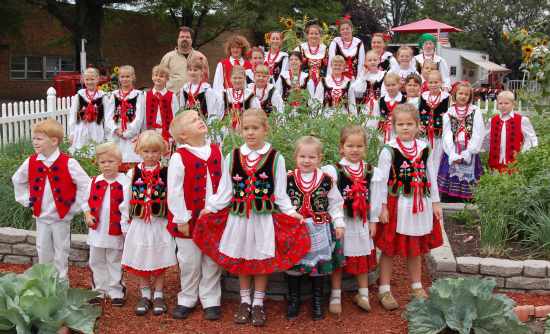
After leaving Prague and Cesky Krumlov we took a nigh-train to Krakow Poland.  This was hugely important to Jeffrey as his father's side of the family is 100% Polish with his grandparents coming arriving in the US at a very young age.  Those Polish roots had manifested themselves in cultural traditions such as polish dancing (in polish costume), polish food such as Kielbsa and of course Polish jokes.  Whether it was a romanticism or a sub-conscious drive - Jeffrey did feel connected to Poland and the people there.

Night-Train Night Pain

We took the overnight train from Prague to Krakow.
The Good:

  • Train stations are close to the city centers making transport easy
  • Sleeping in the train overnight eliminated the cost of a hotel/guesthouse room
  • Train travel is relatively authentic
The Bad:
  • The tickets from Krakow to Budapest, which we had to book last minute, were expensive
  • The bed mattresses were pretty firm
  • There wasn't a whole lot of space at the top
Good thing we are both small.
The Ugly:
  • We had noisy/obnoxious passengers in our car twice.  First it was two male UK college students who gossiped and complained like spoiled brats.  The second time was three french girls who had a picnic complete with stinky food and loud conversation while we were trying to sleep.
  • Temperature control was non-existent making it very hot at the top.
It was survivable and definitely not the worst experience of the trip.  I think I might even recommend it to others if they have a decent pain tolerance and a talent for heavy sleeping.

Once we arrived in Krakow we walked from the train station to our hostel to drop our bags off.  We came across a rather unique scene; groups of folks were marching together singing and carrying banners.  Because of our lack of Polish language skills it was difficult for us to understand.  We tried to use context clues.  One being the high proportion of clergy (priests and nuns) in the procession.  Another being the continuous flow of people and rather up-beat spirit.  
I joked with Megan that in order to figure out what the parade was for, we could follow it to its termination.  Boy was that a bad idea.  We ended up learning that the procession was a pilgrimage to the shrine of Jasna Gora that just started and would last for 10 days and 120 kms.  Safe to say that would of altered our vacation plans a bit.

Instead of walking to Jasna Gora we grabbed a quick breakfast at a local cafe.  It wasn't fancy by any means but filled the void and gave us some energy ahead of our walking tour and museum plans.
No frills Polish Breakfast.

Main Market Square in Krakow

Our sightseeing began at the Main Market Square.  It's the largest medieval town square in Europe.  It's a UNESCO heritage site and the surrounding buildings still have their medieval architecture roots.  In old times the parents would bring their daughters of age into the square and past the cafes in hopes they catch the eye of a young bachelor.  Today there are still many restaurants and cafes where locals and tourists can enjoy the scenery. 
In front of the massive and beautiful Cloth Hall
One of the really cool buildings was the Cloth Hall.  It was the center of trade in Krakow which put itself on the map as a trading town and key stop-off on trade routes through Europe.  In the past exotic spices, foods, and metals were sold there, now its just mainly cheesy souvenirs.  I'm not going to complain too much as I bought both a hat and shirt (fulfilling my polish pride).

Another beautiful building on the Main square is St. Mary's Basilica with two rising towers.  Every hour a trumpeter emerges to play a tune to tell the town everything is alright.  The trumpeter abruptly ends the song mid-note to comemorate a trumpeter that was shot in the throat while sounding the alarm of invading Mongol attack.
St. May's Basilica
The Basilica is very beautiful inside as well.  We dropped in and sad a few prayers and paid respects.  On the outside of the basilica are a number of beautiful memorials including this one of Pope John Paul II (a former archbishop and student of Krakow).

The Town Hall Tower is also a cool site.  It was attached to a complete town hall building but part of it was demolished in efforts to open things up.  Now just the tower remains and it is beginning to lean as it wasn't meant to standalone.
Last picture with dopey me in it for a while.  I promise.

Nice Classical Architecture

We caught a nice walking tour around town and saw these sites as well as the Krakow campus (a very old university) and the Wawel Castle complex.  The Wawel castle was the seat of the Polish empire.  It is composed of the King's residence, many administrative buildings, and beautiful religious buildings.  The Castle towers over the town and is a great spot for views.
Back view of the Castle.
During our walk through town we saw the Opera house.  It looked especially neat at night.

Hostel & Partying

We stayed at Tom and Greg's Beer Hostel.  True story: Tom and Greg's Party Hostel was sold out so we had to settle for the Beer Hostel.  Here we experienced the best and worst of hostel life.  On the good side we met a lot of social people and had no problem making friends.  Every night the hostel hosted drinking events such as Sangria night and a Pub Crawl.  Our first night we took it easy because we were going for some heavy sightseeing the next day at Auschwitz the next day.  Our plans to get a good night sleep were thwarted by hostel shenanigans.  At 4am a drunk belligerent hotel guest pounded on our door for 30 minutes to be let in.  Eventually he realized he was at the wrong room and then passed out on the couch.  Those thirty minutes were painful and awkward.  The next evening we decided to partake in the Pub Crawl to get a heavier night's sleep.  Don't worry we were safe and sound.  The bar and club scene in Krakow is outstanding.
Now that is a Sangria night!

Polish Ethnography Museum

The Polish Ethnography Museum was a hoot.  Maybe not quite as entertaining as the KGB Museum in Prague but just as fascinating.  It's density of artifacts and facts was impeccable.  Each exhibit came with a 10 page report on the thorough history of life in Poland.  For example we spent half an hour learning about early agriculture methods including honey farming.  The museum was more anthropology and less entertainment.  Not for the faint of heart.
Hey Look a Bear - Nope it's a Beehive!
The Polish traditional costumes were particularly cool.  They had over 30 and they traced the differences based on region, class and time period.

Polish Food

I like Polish food but I understand that I'm biased being 50% Polish.  When I told my Italian friend that we enjoyed the food in Poland he said "you must be kidding me.  Even American food is better than Polish food."  (ouch)  I tried my hardest to sell Megan on Polish food and we had a few feasts.  We searched out the best in Kielbasa and Pieorgies - Polish Musts.  At Pierogi Vincent we even tried blueberry pierogis (they had over 30 varieties which you can see at their website http://pierozkiuvincenta.pl/menu).  We also tried a few different foods too.
Golabki - cabbage stuffed with ground beef - tasty sauce
Herring

Home of Pope John Paul II

One of the most famous Krakow residents was Pope John Paul II.  He was a student at the local university and he later became the Archbishop of Krakow.  There is a museum where you can visit where he lived and see some of his artifacts.  There was a variety of stuff like the kayak he owned as a young man, a set of skis, many church outfits and gifts he was given by world leaders.  It was moving and inspiring seeing pictures of him throughout his life.  It made me very proud to be Polish.


Krakow was great.  We enjoyed our short stay and would definitely recommend it to others.

Saturday, 30 August 2014

Exploring Prague, Czech Republic

Once we took care of our London housing needs, we booked travel to Central Europe.  With a few bucket place destinations in mind we booked flights (to Prague and back from Budapest) and booked a few hostels in advance.  14 days of backpacking awaited us.  The rest of the trip was a Tableau Rasa, our blank canvas.
A view of Old Town and Charles Bridge.

Why Prague?

We choose Prague for its beautiful architecture, trendy culture, and tremendous value.  Prague is now a poorly kept secret as an up-and-coming place to visit.  It is quite popular with celebrities and backpackers alike.  The tourism boom has made it full of tourist infrastructure (tours, hotels, transportation) to accommodate the massive hordes of travelers.  While it is not quite as cheap as it used to be, it is still a great bargain relative to western Europe.

Hostel Life

We stayed close to Old Town (main tourist area) at the Advantage Hostel.  The hostel provided a good location from which to walk to many of the attractions.  We also got involved in a number of free activities they offered: cooking night, sangria night, BBQ, walking tours.  It was a great way to socialize with fellow travelers.  We met a couple memorable guys from Australia, Ireland and Scotland.

Exploring Old Town

Prague has an amazingly well preserved Old Town that is remarkable in terms of architectural diversity, size, and density.  In the center of the Old Town is the Town Square.  The Town Square has interesting monuments and historically signicficant buildings.  One of the most popular attractions is the astronomical clock.  It is an incredibly complex contraption that tracks the time, sun, and moon phases through completely mechanical mechanisms.  A few urban legends exist around the clock.  One is that the original builder became distraught with the government and tried to break it.  He died in trying to do so.  It took them around a hundred years to get it operational again.
The Astronomical Clock on the Town Hall
Another more recent legend is that they added elements (like a trumpeter) to the show because many tourists were underwhelmed by the clock experience.  We were not amazed but we appreciated it none the less.

Also in the square was a large and beautiful sculpture of Jan Hus.  He was an outspoken Catholic priest who tried to reform the Church.  He was a key predecessor to other protestants such as Martin Luther.  His followers schism-ed from the Church after his death, leading to three Crusades.  Hus's impact on Prague and the Czech Republic is quite profound.

The Charles Bridge is another popular attraction.  It is both gorgeous and practical as it connects the Lesser Town with the Old Town.  The bridge dates back almost 700 years.  It has on it over 30 Baroque style statues depicting key figures in Christianity and Czech history.  As you cross the bridge on a summer's day you will encounter many tourists, artists selling their artwork and street performers.  The artwork was quite nice and almost too tempting to pass up.
A shot of the Charles Bridge and the Old Town side.
The main attraction on the other side of the bridge is the Prague Castle.  It is the largest Castle complex in Europe and contains a cathedral, a basilica, the presidential offices, small town shops and the former palaces of past Kings and Queens.  The Castle is upon a tall hill that overlooks the city.  This provides many opportunities for great photography.
View of the castle from the Bridge.
View from the Castle looking back at the Old Town.
We took a free walking tour to the Prague Castle.  Our guide was an eccentric local who brought his dog around from the trip.  Our guide also drank no less than 3 large beers and he stopped to talk to almost every local street performer (making our trip a long and memorable one).  His knowledge of the architecture and area was impressive and greatly enhanced our understanding of Prague.
Sneak shot of our Prague Walking tour Guide
The Cathedral was the most impressive part of the Castle complex.  The exterior exhibited a diversity of architectural styles as it was build over the span of 400+ years in fits and spurts.  It's in extremely good condition.  Inside is the resting spot of famous Czech Kings.  The ornamentation, artwork and stained glass windows were impressively detailed and beautiful.
The Cathedral at Prague Castle.  The Gothic Arches were magnificent. 
A sample of the stain glass windows of the Cathedral
Our exploration of the Castle took the better part of a day given it's scope and detail.  Definitely worth a trip if the weather is nice as the views are gorgeous and the exterior detail is something to be appreciated.

Paddle Boating - Better than expected

Megan convinced Jeff to try Paddle Boating on the Valta River.  It turned out to be a fantastic time.  The views were great of Prague Castle, the Charles Bridge, the Old Town and a couple islands in the river.  We enjoyed a few local beers and some local snacks while just enjoying the weather.  It was certainly a fun/silly tourist thing to do.

Czech Food and Beer

Throughout our Central/Eastern Europe trip we wanted to sample the authentic local food and beer.  The Czech food we found was extremely filling and hearty.  Beef Goulash was a popular favorite.  We also had a really good rack of ribs.  In general the tastes were simple with only light seasonings.  The Pilsner style beer owes its origins to the Czech Republic.  We had plenty of those as really reasonable rates.  We both definitely loved the Czech Beer.
Sooo much food and beer.
If you don't like Czech food it's ok.  Don't let that deter you from traveling to Prague.  Prague had a wide selection of restaurants serving quality foods from other cultures: greek, italian, and asian.

KGB Museum - a must see for fans of the strange

Through TripAdvisor we found a few attractions that were off the beaten path.  The first was the KGB Museum.  It's not as much a Museum as it is one man's temple to Stalinism/Soviet Militarism.  You cannot enter the museum until it's host lets you in.  He speak with a Russian accent so strong its comical (think Boris and Natasha from Rocky and Bullwinkle).  Whenever he feels like starting the tour he starts the tour.  First up was photo opportunities.  We took these two gems and many others.  It was intimidating as he repeatedly mentioned how the rifles were so light; simultaneously Megan and I struggled to keep them steady for the photos.

His retelling of Soviet history was unique in its entertainment value as well as it's portrayal of Joseph Stalin as a hero.  The owner iterated that Stalin was still the most popular man in Russia.  During the course of the tour the owner would demonstrate how secret knifes, guns and pens would be used.  It was the least safe we have felt in a while.  But fortunately we came through the tour intact with a greater appreciation of the efficiency and leathality of the KGB.  We also go to see some of Lenin's personal belongings.  As a history buff Jeff loved it and as a connoisseur of bizarre experiences Megan also loved it.

Memorial to the Heroes of the Heydrich Terror

Another Tripadvisor gem was the National Memorial to the Heroes of the Heydrich Terror.  During World War II, Czechoslovakia was occupied by Nazi Germany.  Reinhard Heydrich was one of the key Nazi administrators.  He was one of the most brutal and twisted Nazi Leaders.  The Czech resistance with support of the British government devised a plot to assassinate Heydrich.  They launched paratroopers into the country.  The paratroopers then spent months working with the underground movement to set up their operations.  The assassination was carried out in May 1942 and despite the gun jamming, circumstances worked in the Allies favor and the attempt was successful.  The assassins were far from safe though and they had to hid in a Church in Prague.  The Nazi retaliation was swift and many Czech resistance fighters and their families were killed.  After a lengthy search, the assassins were found in the Church and a lenghty shoot out commenced.  The Czech resistance fighters were forced into the crypt where they ended their lives.  The museum is in the Church and you can enter the crypt where the final moments were.  It's a very well done museum and the crypt was incredibly moving.

Nightlife in Prague

One of our last nights in Prague we explored the nightlife.  We started at one of Prague's traditional beer halls U Fleku.  What we encountered was a legitimate tourist trap.  We were guided to a small room full of tourists and an accordion player.  As soon as we arrived they gave us pints of beer without us ordering.  This was a suspicous sign.  Then came the standoff.

Our waiter came around with shots and gave us two.  We politely declined by saying we were just drinking beer.  Our waiter then insisted we have them because "it was Czech tradition".  Again we politely decined saying we were not interested.  At this point the waiter's tone became hostile and he demanded that we drink these shots. He hovered over our table starring at us.  We stared right back and again refused to take the shots.  For about two minutes this back and forth continued until finally he went away.  It was an incredibly awkward and bizarre experience. We highly recommend everyone avoid U Fleku.

Later that night we went to Karlovy Lanes in the Old Town.  This is Prague's most famous club.  It has five floors and an ice bar.  Each floor had a it's own music and vibe.  For example there was a techno floor that had a sunken dance floor with a Laser show.  There was also a hip hop floor with a dancer (practically a stripper) on a raised clear platform above the crowd.  Our favorite floor was the oldies floor which played a delightful mix of music and had an awesome disco floor that providing limitless entertainment.  We had a great time with our friends Mark and Ryan.

 Megan handing with Ryan and Mark (friends from our hostel)
The Disco Floor!
This club concept gave me an idea for a movie.  In the action genre there is an archetype for a movie where an action hero must ascend a many-storied building defeating bad guys on his way up (see Raid and Bruce Lee's Game of Death - where he battles Kareem Abdul Jabeer!).  What if they combined this format with the dance genre?  Our protoganist is an accomplished dancer who has to dance his way to the top (battling different dancers of different genres on each floor) to win the love of his life?  Well this idea was definitely better in my head, but I think it could be at least as successful as some of the other wacko concepts that come out.